
The History of Science Fiction by jurvetson, CC BY 2.0, via Flickr
Classic Science Fiction Books: Which to Read First
The classic science fiction books to read first are the titles that recur across a consensus built from eight heavily visited book sites: Dune, Foundation, Neuromancer, Do Androids Dream of Electric Sheep?, The Left Hand of Darkness and Rendezvous with Rama. Start there, then pick an era, such as the 1930s or the 1950s, and branch out.
No list agrees on exactly what counts as a classic, so this guide works by era. Each section gives you one clear starting point and says plainly where the evidence is thin. If you are not sure which kind of science fiction suits you, our reader's map of science fiction subgenres is a good companion.
What counts as a classic science fiction book?
There is no single agreed cut-off, so the answer depends on which list you use. One consensus guide to the best science fiction novels leaves out everything written before the Second World War. It also excludes short stories, anthologies, comics and fantasy, so it covers modern novels only.
Others draw the line differently. A 1988 anthology, The Mammoth Book of Classic Science Fiction, edited by Isaac Asimov with Martin H. Greenberg and Charles G. Waugh, starts in the 1930s. It collects ten novellas and novelettes from that decade, with an introduction by Asimov. At the other end, James Wallace Harris reports a YouTube reviewer who counts as vintage any book published before barcodes appeared on their covers, a point Harris dates to the mid-1980s. Harris reports that definition rather than endorsing it.
So for a first read, choose an era first and a title second. Each era below has its own starting point.
Which classic science fiction books appear most often?
The most useful evidence is a guide built from the eight most-trafficked sites that came up in a search for all-time best science fiction novels. Of the nearly 300 titles on those sites, 51 novels appeared at least three times each. The guide lists them alphabetically by author rather than ranking them, so no single book sits at the top.
The recurring names include Dune, Foundation, Solaris, The Left Hand of Darkness, The Dispossessed, Ringworld, Do Androids Dream of Electric Sheep?, Rendezvous with Rama, Neuromancer, Doomsday Book and The Martian. Philip K. Dick's android story sits beside Ursula K. Le Guin's two novels, and Stanisław Lem's Solaris also appears.
The same guide admits its consensus leans towards modern novels, because it is limited to modern work. Read it as a map of the post-war field, not of everything that ever mattered.
A single reader's list is a different kind of evidence. Nathan B. Weller's twenty essential titles, arranged alphabetically, include Frankenstein, Brave New World and Dune. He describes them as the books he has been most impressed with during a recent sci-fi binge, so treat it as one reader's view rather than a survey. If Mary Shelley's novel tempts you, our piece on how Mary Shelley created Frankenstein is a useful next step.
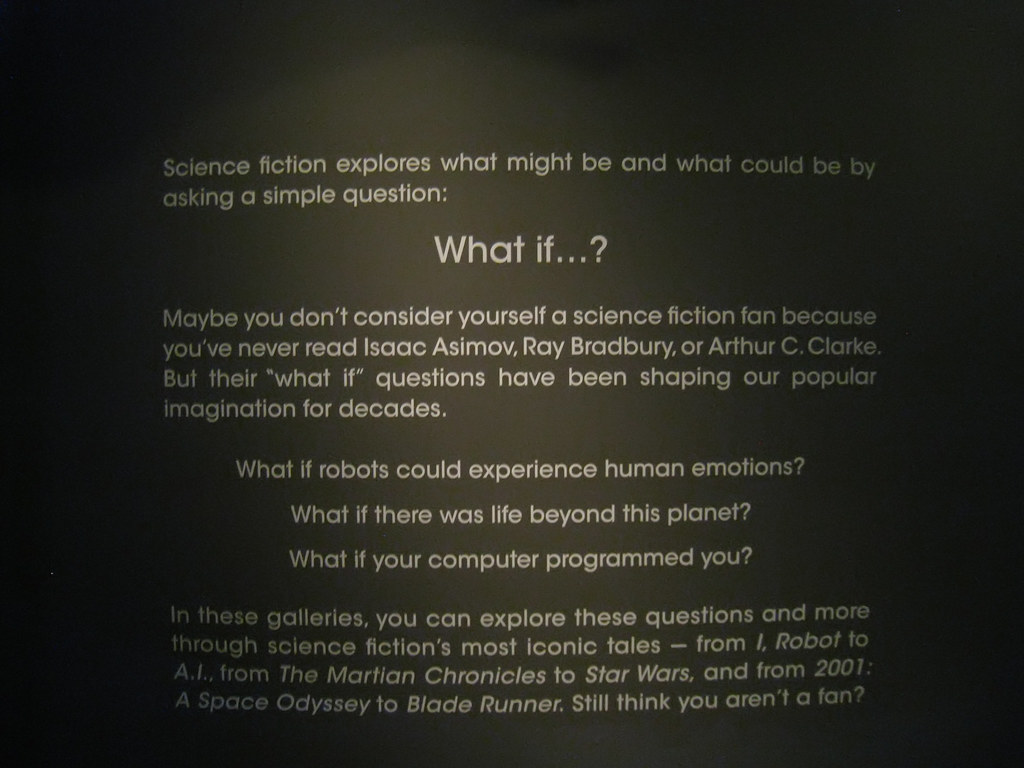
Where should a reader start with 1930s and 1950s classics?
For early science fiction, the 1930s anthology is a handy sampler. It gathers Lovecraft's The Shadow Out of Time, John W. Campbell's Who Goes There? and L. Sprague de Camp's Divide and Rule, among others. It is also the first in a series of six samplers covering the field from the 1930s through the 1980s, so it can lead you into later decades too.
Going further back, the consensus guide above skips pre-war work by design, so you will need other sources for it. Our explainer on H.G. Wells's The Time Machine covers the book, including the Eloi and Morlocks.
For the 1950s, the Library of America volume American Science Fiction: Four Classic Novels 1953–1956 is a neat route. Edited by Gary K. Wolfe, it holds The Space Merchants by Frederik Pohl and C. M. Kornbluth, More Than Human by Theodore Sturgeon, The Long Tomorrow by Leigh Brackett and The Shrinking Man by Richard Matheson. The first satirises a future dominated by multinational advertising agencies. In the last, the hero is condemned to grow smaller after a mysterious cloud. Wolfe's introduction describes these once-outsider novels as now recognised as American classics.
One caution: the series is American, so it does not settle what the whole field's canon is. Readers should add titles from other traditions, such as Lem's Solaris. If you are unsure whether you want physics-heavy stories or sweeping adventure, our guide to hard SF versus space opera can help you choose.
Which Heinlein book should I read first?
Harris says Robert A. Heinlein's juveniles were his favourite science fiction books when he read them in the 1960s. Most of the juveniles he lists were published in the 1950s.
His own recommendations are Have Space Suit, Will Travel, Tunnel in the Sky, Time for the Stars, The Rolling Stones, Farmer in the Sky, Citizen of the Galaxy, Starman Jones, The Star Beast, Double Star and The Door Into Summer. If you want one entry point, the premise that appeals most to you is a sensible guide.
Harris also argues that Heinlein's reputation is fading and blames online reviewers for discussing the wrong books. That is his opinion, and you can weigh it against other views.
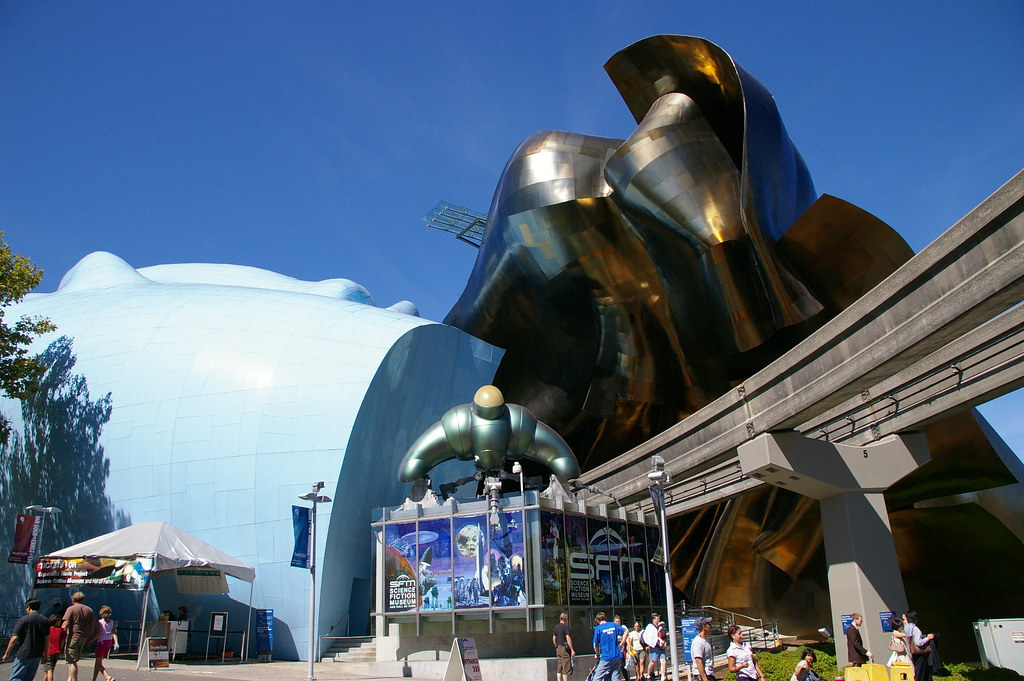
What do vintage reviewer lists add?
The consensus lists lean on well-known names, so a reviewer's list of vintage titles widens the picture. As Harris reports it, the YouTube reviewer's list includes Inherit the Stars, Daybreak 2250 AD, Star Kings, Deathworld, Sirius, Goblin Reservation, The Ship Who Sang, Little Fuzzy, The Stainless Steel Rat, Trouble with Lichen, Empire Star, Downward to the Earth, Iceworld, Hospital Station and Decision at Doona.
That is the reviewer's list, not Harris's own set of picks. Harris says he has read most of them, and he places Empire Star and Downward to the Earth in his own top 25. Those two are a reasonable place to start if you want titles beyond the famous names.
Harris also argues that many vintage titles are now reprinted as Kindle books, sometimes for $1.99, and that the mass-market paperback has largely disappeared. If that holds, older titles may be easier to find cheaply than they once were.
Try 30 Harry Potter Facts Even Potterheads Don’t Know
Hidden names, clues you only spot on a reread, the real Hogwarts and what to know before HBO's series: 30 checked Harry Potter facts as tap-through stories.
Sources and further reading
Pages we opened when writing this article, last checked 16 October 2026. They open in a new tab, and we are not responsible for what other sites publish.
- The ultimate guide to the all-time best science fiction novels — Supports the eight-site consensus, the 51 recurring novels, the exclusions and the modern-leaning caveat.
- The Mammoth Book of Classic Science Fiction — Supports the 1930s anthology, its contents, its editors and the six-volume series.
- American Science Fiction: Four Classic Novels 1953–1956 — Supports the four 1950s novels, editor Gary K. Wolfe and the introduction's description.
- Gimme That Old Time Science Fiction — Supports the barcode definition of vintage, the reviewer's list, the Heinlein juveniles and the Kindle reprints.
- 20 Essential Sci-Fi Books & Series — Supports the personal alphabetical list including Frankenstein, Brave New World and Dune.
This article was written with the help of AI. Before publication, automated checks confirmed that every listed source was opened and every picture is credited. Spotted a mistake? Write to [email protected].
More articles

The Time Machine Explained: Eloi, Morlocks and the End of the World
H.G. Wells's 1895 novel in plain language: what happens, what the Eloi and Morlocks stand for, and why the ending still unsettles readers.

Frankenstein: How a Teenager Wrote the First Modern Monster
Mary Shelley began Frankenstein at eighteen during a cold summer in 1816. The real book is stranger, sadder and smarter than the films.

Hard SF Versus Space Opera: Which Should You Read First?
Hard SF puts physics first and space opera puts scale first. Here is how the two differ, where they overlap, and which one suits a newcomer.